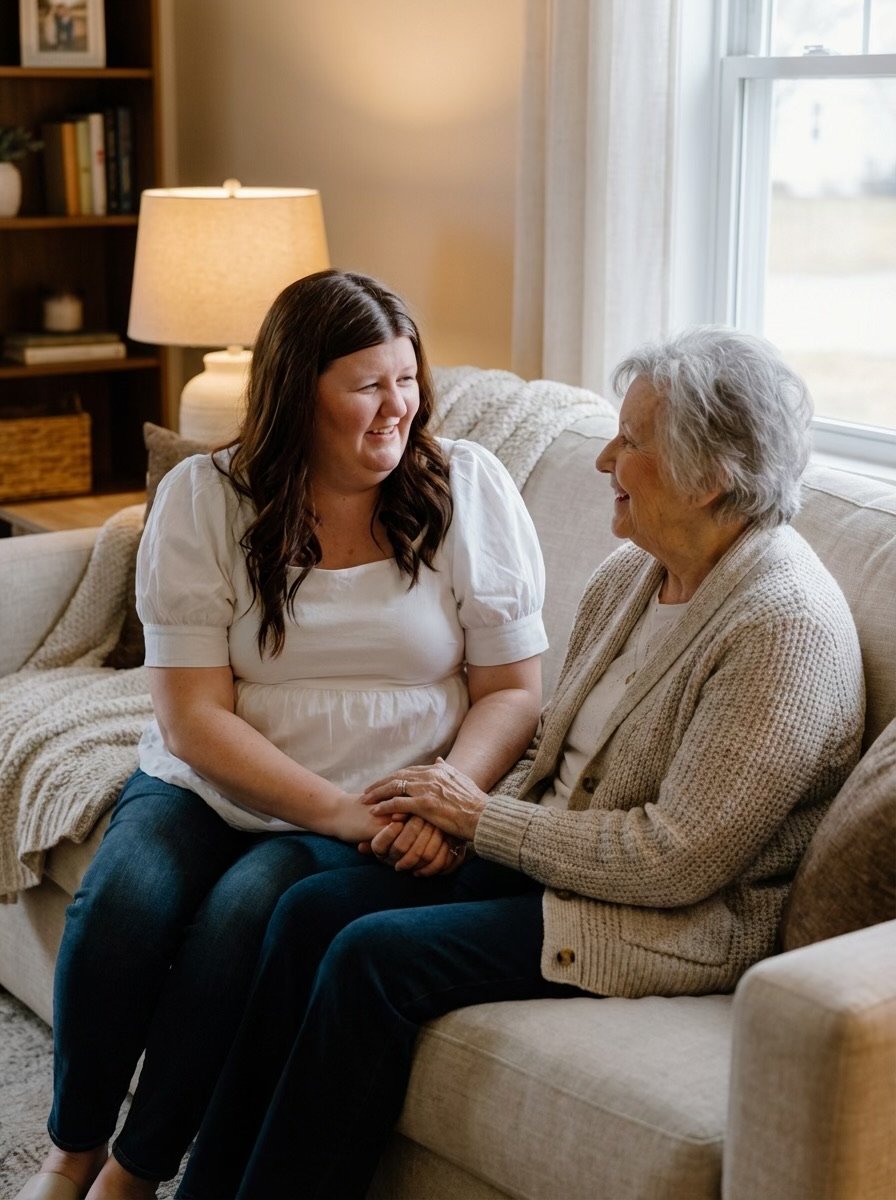
A Spokane mother I worked with had spent months shutting the conversation down. Everyone around her thought it was denial. Every time her future came up, she changed the subject, or she got angry, and the assumption was that she was avoiding the truth.
She wasn't avoiding anything. She was protecting something.
When I finally sat down with her, I asked what she was most afraid of. Losing her independence. Losing her dog. Being forgotten. Not one of those fears was about care. They were about identity.
Once we understood what she was actually protecting, every conversation that followed was different.
Resistance Isn't Stubbornness
When a parent shuts down or gets angry about future care, it's rarely about denial, it's fear wearing a familiar face.
From the outside, changing the subject or getting defensive looks like avoidance. From the inside, it often feels like self protection. Nobody wants to sit calmly and discuss the ways their life might shrink. That reaction isn't a character flaw, and treating it like one usually makes a parent dig in harder, not soften.
Start With Their Values, Not the Logistics
The most effective way to open this conversation is to ask what matters most to them, not to lead with what you think they need.
Most families start with logistics: the house, the finances, the level of care. Those are real questions, but they're not where trust gets built. Starting with values instead, asking what independence actually means to them, what they're most afraid of losing, what makes them feel like themselves, tends to open a door that logistics alone keeps shut.
What Are Parents Actually Afraid Of?
Most parents aren't afraid of losing the house. They're afraid of losing their independence, their identity, and the things that make daily life feel like theirs.
In my experience, when parents resist this conversation, the fear underneath is rarely about money or square footage. It's about who they are without their independence. It's about their dog, their routine, their sense of still being needed. When they understand that planning ahead is what protects those things, rather than threatens them, the conversation tends to shift.
What Can You Actually Do Differently?
A few ways to open this conversation differently than most families do:
- Ask what they're most afraid of before explaining what you think should happen
- Listen for what's underneath the resistance, independence, identity, being forgotten, rather than treating the resistance itself as the problem
- Frame planning as something that protects what they value, not something that takes it away
- Expect this to take more than one conversation, and let it
If This Sounds Familiar
If your parent shuts down every time this comes up, you're not doing it wrong, and neither are they. This is one of the hardest conversations a Spokane family can have, and there's no version of it that's supposed to feel easy. If you're not sure where to start, or you've already tried and it didn't go well, I'm glad to talk through your specific situation.
About the Author
Emiley, Rios and Co Real Estate
Senior living transitions are Emiley's focus at Rios and Co Real Estate, and she'll be the first to say the hardest part of this work with Spokane families usually isn't the paperwork or the home sale, it's the conversation that has to happen before any of that. She spends a lot of her time simply sitting with families and helping them figure out what a resistant parent is actually protecting, so the next steps feel like support instead of pressure.
This article is for general informational purposes and does not constitute medical, legal, or therapeutic advice. Every family's situation is different. For guidance specific to your parent's needs, consult a healthcare provider or elder care professional.